The Complete Guide to AEO
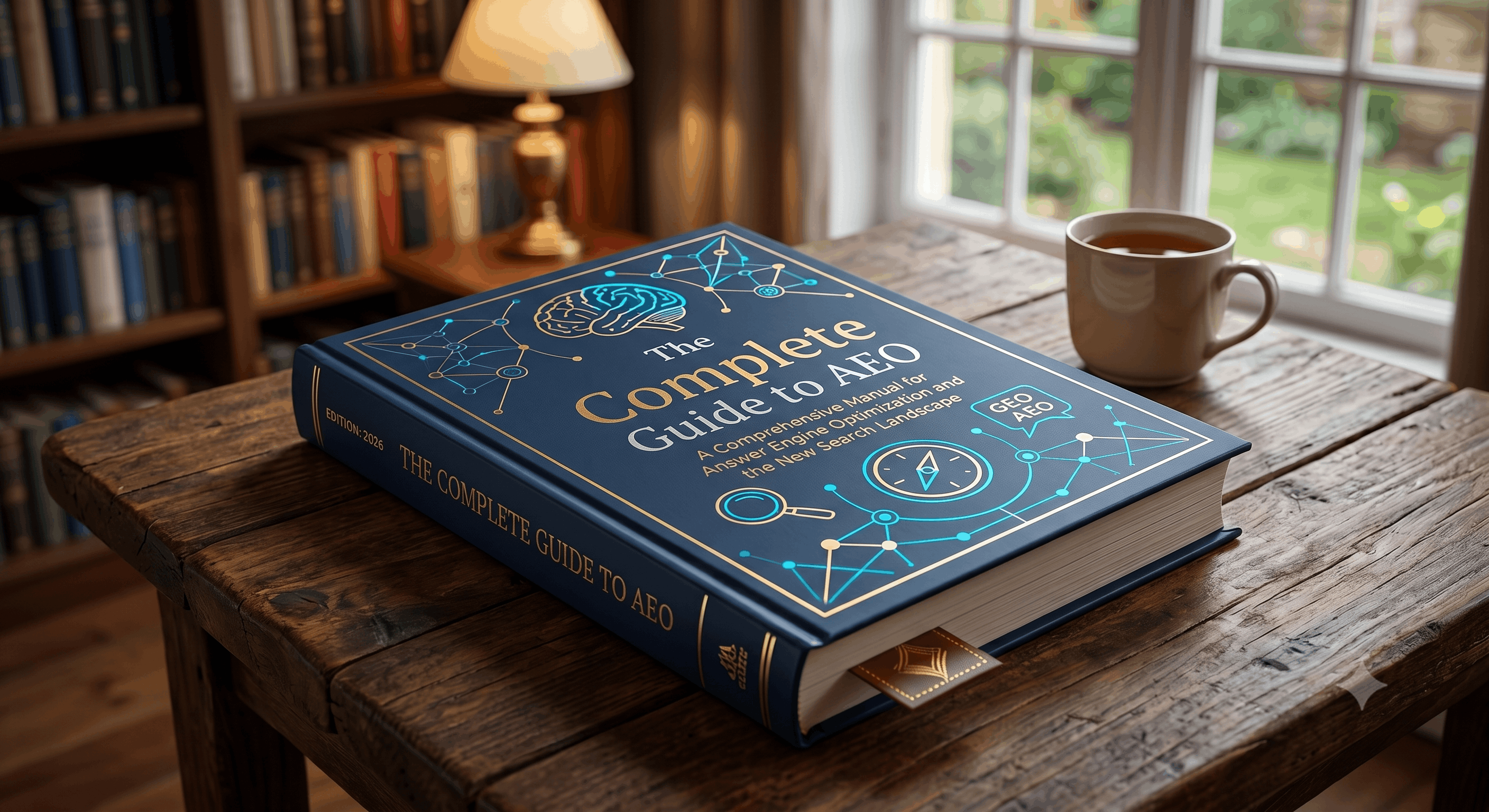
We discussed Generative Engine Optimization, and we figured the other sibling should get its fair share as well. Welcome to the Complete Guide to AEO.
<h2><strong>What This Guide Covers:</strong></h2><p></p><p>In <a target="_blank" rel="noopener noreferrer nofollow" class="text-primary underline" href="https://ahrefs.com/blog/search-rankings-ai-citations/"><u>July 2025, Ahrefs found</u></a> that 76.10% of the pages Google's AI Overviews cited also ranked in the top 10 organic results for the same query. By <a target="_blank" rel="noopener noreferrer nofollow" class="text-primary underline" href="https://ahrefs.com/blog/ai-overview-citations-top-10/"><u>March 2026, that number had collapsed to 37.9%</u></a>. Same search engine, same ranking system, a completely different relationship between where you rank and whether you get quoted. That is not a small shift. It means a huge share of the pages winning AI Overview citations today would not have won them eighteen months ago, and a huge share of pages that used to win them no longer do.</p><p>That gap is what answer engine optimization (AEO) is built to close. AEO is the practice of structuring content so Google's own answer surfaces, AI Overviews, featured snippets, People Also Ask and other zero-click formats, select your page as the source. It is not the same job as ranking well, and increasingly it is not even a job that ranking well gets you close to finishing.</p><p>This guide walks through what AEO actually is, how Google's answer surfaces decide what to feature, a full step-by-step framework for optimizing your content, a quick-start checklist you can run today, the mistakes that quietly sink most AEO efforts and a glossary of the terms you will hit along the way.</p><p></p><h3><strong>In this guide:</strong></h3><ul><li><p>Section 1: What is answer engine optimization (AEO)?</p></li><li><p>Section 2: AEO vs. Traditional SEO: what changed and what stayed the same</p></li><li><p>Section 3: How Google's answer surfaces actually decide what to feature</p></li><li><p>Section 4: The AEO optimization framework, step by step</p></li><li><p>Section 5: AEO quick-start checklist</p></li><li><p>Section 6: Common AEO mistakes to avoid</p></li><li><p>Glossary of AEO terms and where to go from here</p></li></ul><p></p><p></p><h3><strong>Key Takeaways</strong></h3><p></p><ul><li><p>AEO is specifically about winning Google's own answer surfaces (AI Overviews, featured snippets, People Also Ask, zero-click results). Earning citations inside ChatGPT, Perplexity or Gemini is a related but separate discipline called generative engine optimization (GEO).</p></li><li><p>Ranking and getting featured are now measurably different outcomes. Only 37.9% of AI Overview citations came from Google's top 10 as of March 2026, down from 76.10% in mid-2025, and the gap appears to be widening rather than stabilizing.</p></li><li><p>Three specific content changes have documented, tested effects on citation visibility: adding direct quotations, citing authoritative sources and adding original statistics. None of these are vague advice. All three come from a peer-reviewed study that measured the effect directly, and quotations turned out to be the strongest lever of the three.</p></li><li><p>Google shipped real measurement infrastructure for this in 2026 through Search Console's Generative AI performance report, but it is still mid-rollout, so treat the data you get from it as partial, not complete, and use interim proxies alongside it.</p></li><li><p>A page can pass every technical AEO checklist and still never get featured if the actual content underneath the schema and formatting does not answer the literal question a person is asking.</p></li></ul><h2></h2><p></p><h2><strong>Section 1: What is Answer Engine Optimization (AEO)?</strong></h2><p></p><h3><strong>The Core Definition</strong></h3><p>Answer engine optimization is the practice of structuring content so Google selects it as the direct answer inside AI Overviews, featured snippets, People Also Ask and other zero-click search features, rather than requiring the searcher to click through to a ranked result. A page can be optimized for AEO independently of how well it ranks. The two are related but not the same test, and increasingly they produce different winners for the same query.</p><p><strong>Key term: AEO.</strong> Optimizing content so Google's own answer surfaces (AI Overviews, featured snippets, People Also Ask) extract and display it directly, without requiring a click.</p><h3><strong>A Brief History</strong></h3><p>Google's answer surfaces did not appear all at once. Featured snippets arrived first, <a target="_blank" rel="noopener noreferrer nofollow" class="text-primary underline" href="https://blog.google/products/search/reintroduction-googles-featured-snippets/"><u>introduced in January 2014</u></a>, pulling a short passage, list or table directly into the results page above the ranked links. People Also Ask followed in April 2015, expanding a single query into a scrollable set of related questions, each with its own extracted answer. Both of these ran for roughly a decade as a layer on top of traditional rankings: useful to win, but an add-on to a results page that still centered on ten blue links and a single snippet winner per query.</p><p>Well before AI Overviews existed, Google's core ranking systems had already started rewarding first-hand experience and demonstrated expertise more heavily than polished but generic content. That earlier shift matters here because it set the foundation AEO now builds on: a page that could not demonstrate real expertise struggled to rank even in the pre-AI-Overview era, and it struggles even more to get extracted now, because extraction adds a second, stricter filter (can the passage stand alone) on top of the first one (does this page show real expertise at all).</p><p>AI Overviews changed the shape of the page itself. <a target="_blank" rel="noopener noreferrer nofollow" class="text-primary underline" href="https://blog.google/products-and-platforms/products/search/ai-overviews-update-may-2024/"><u>Since their broader US rollout announced at Google I/O on May 14, 2024</u></a>, they sit at the top of the results, synthesize multiple sources into a single generated answer and cite several pages at once rather than lifting one clean passage from one winner. That is the real structural break from the snippet era: a featured snippet had exactly one occupant, so ranking near the top and writing a clean answer were usually enough to compete for it. An AI Overview can cite four or five sources for the same query, drawn from anywhere the underlying model can reach, not just the visible top of the results page. That shift from "one snippet, one source" to "one generated answer, several cited sources, some of them invisible in the rankings" is the reason AEO has become its own discipline instead of a footnote inside standard SEO advice.</p><h3><strong>AEO vs. GEO vs. AI SEO, Clearly Split</strong></h3><img src="https://access.discoveraio.com/storage/v1/object/public/public-assets/email-images/AdobeStock_1583851367.jpg" alt="" class="editor-image max-w-full h-auto rounded-lg cursor-pointer transition-all hover:opacity-80" draggable="false" style="max-width: 100%; height: auto;"><p>Three terms get used almost interchangeably across the industry, and that looseness causes real confusion. Here is how DiscoverAIO defines each one, consistently, across all of our content:</p><ul><li><p><strong>AI SEO</strong> is the umbrella discipline: optimizing your content to perform across AI-augmented search in general.</p></li><li><p><strong>AEO (answer engine optimization)</strong> sits underneath that umbrella and covers Google's own answer surfaces specifically: AI Overviews, featured snippets, People Also Ask and zero-click results.</p></li><li><p><strong>GEO (generative engine optimization)</strong> also sits underneath AI SEO, but covers a different surface: earning citations inside conversational AI tools like ChatGPT, Perplexity and Gemini.</p></li></ul><p>If you want the full framework for GEO, <a target="_blank" rel="noopener noreferrer nofollow" class="text-primary underline" href="https://discoveraio.com/guides/the-complete-guide-to-geo"><u>the Complete Guide to GEO</u></a> is this guide's companion piece. For a shorter orientation to all three terms side by side, see <a target="_blank" rel="noopener noreferrer nofollow" class="text-primary underline" href="https://discoveraio.com/articles/ai-seo-vs-aeo-vs-geo-whats-different-and-why-you-should-unify-all-3"><u>AI SEO vs AEO vs GEO</u></a>. This guide stays inside the AEO lane deliberately. Google's answer surfaces have their own mechanics, their own measurement tools and their own optimization steps, and trying to cover both AEO and GEO in a single resource means neither gets covered well.</p><h3><strong>Who Needs AEO</strong></h3><p>Any team whose traffic depends on Google search needs an AEO strategy now, not eventually, but the job looks different depending on your seat:</p><ul><li><p><strong>In-house marketers</strong> managing a single domain need AEO folded into existing content review, not treated as a separate project. The framework in Section 4 is designed to run against pages you already have.</p></li><li><p><strong>Agencies</strong> running AEO across client accounts need a repeatable audit process, since re-deriving a strategy for every account does not scale. <strong>Picture this: </strong> An agency account manager running the Section 3 eligibility checklist across twelve client accounts in a single afternoon might find the same two failures on nine of them (no standalone answer block, marketing-language headings) before touching a single client's content individually, which tells them exactly where to standardize their onboarding process rather than solving the same problem twelve separate times.</p></li><li><p><strong>Content teams</strong> who have historically measured success by ranking position alone need a second success metric, citation appearance, added to existing reporting, or they will keep optimizing for an outcome that no longer predicts visibility on its own.</p></li></ul><p>If your current reporting stops at "where do we rank," you are already missing half of what determines whether a searcher sees your brand. Ask yourself this question, does my content answer the possible questions of my prospects within the first 15-20 seconds of them consuming my content? If the answer to that is no, then there may need to be a fundamental reframing of how your content is produced and distributed. </p><h2></h2><p></p><h2><strong>Section 2: AEO vs. Traditional SEO: What Changed and What Stayed The Same</strong></h2><p></p><h3><strong>The Fundamental Shift</strong></h3><p>Traditional SEO optimizes for one outcome: rank in the top 10, then earn the click. AEO optimizes for a different outcome: get extracted into the answer itself, regardless of where you rank. Those used to be roughly the same problem, because Google's older answer features pulled almost exclusively from top-ranked pages. That is no longer true.</p><p>Ahrefs tracked this directly. <a target="_blank" rel="noopener noreferrer nofollow" class="text-primary underline" href="https://ahrefs.com/blog/search-rankings-ai-citations/"><u>In July 2025, 76.10% of the pages cited in AI Overviews also ranked in Google's top 10</u></a> for that same query. <a target="_blank" rel="noopener noreferrer nofollow" class="text-primary underline" href="https://ahrefs.com/blog/ai-overview-citations-top-10/"><u>By March 2026</u></a>, tracking 863,000 keyword SERPs and 4 million AI Overview URLs through its Brand Radar tool, Ahrefs found that share had dropped to 37.9% (37.1% when counting organic links only). Ahrefs attributes the shift to Google's Gemini 3 model relying more heavily on query fan-out, expanding a single search into several related searches behind the scenes and pulling citations from that wider pool, rather than selecting almost exclusively from the primary results page.</p><p><strong>Picture this: </strong> The practical consequence is already playing out for teams managing content at scale. Picture a content lead at a mid-size B2B software company whose flagship comparison page holds position #4 for its target keyword, a strong, defensible ranking by any traditional measure. The AI Overview for that same query cites a competitor's page ranking #9, a page that never shows up on the first screen of results at all. The #9 page did not out-rank anyone. It got surfaced through a fan-out query the content lead never sees in their own rank tracker, because that tracker only watches the visible results page, not the expanded query set Google's model actually searched behind the scenes. Section 4 follows a different page through this exact problem, step by step, so you can see the fix, not just the diagnosis.</p><h3><strong>Side-by-side Comparison</strong></h3><table style="min-width: 75px;"><colgroup><col style="min-width: 25px;"><col style="min-width: 25px;"><col style="min-width: 25px;"></colgroup><tbody><tr><th colspan="1" rowspan="1"><p></p></th><th colspan="1" rowspan="1"><p>Traditional SEO</p></th><th colspan="1" rowspan="1"><p>AEO</p></th></tr><tr><td colspan="1" rowspan="1"><p>Primary goal</p></td><td colspan="1" rowspan="1"><p>Rank in the top 10</p></td><td colspan="1" rowspan="1"><p>Get extracted into the answer</p></td></tr><tr><td colspan="1" rowspan="1"><p>Success signal</p></td><td colspan="1" rowspan="1"><p>Position, click-through rate</p></td><td colspan="1" rowspan="1"><p>Citation in AI Overview, snippet or PAA</p></td></tr><tr><td colspan="1" rowspan="1"><p>Content shape</p></td><td colspan="1" rowspan="1"><p>Long-form, keyword-optimized</p></td><td colspan="1" rowspan="1"><p>Structured for standalone extraction</p></td></tr><tr><td colspan="1" rowspan="1"><p>Content unit rewarded</p></td><td colspan="1" rowspan="1"><p>The page as a whole</p></td><td colspan="1" rowspan="1"><p>The individual section or passage</p></td></tr><tr><td colspan="1" rowspan="1"><p>Competing against</p></td><td colspan="1" rowspan="1"><p>Other ranked pages</p></td><td colspan="1" rowspan="1"><p>Every page Google's model can fan out to, ranked or not</p></td></tr><tr><td colspan="1" rowspan="1"><p>Winner count per query</p></td><td colspan="1" rowspan="1"><p>One ranked list, effectively unlimited positions</p></td><td colspan="1" rowspan="1"><p>Often four to five cited sources, sometimes fewer</p></td></tr><tr><td colspan="1" rowspan="1"><p>Primary measurement tool</p></td><td colspan="1" rowspan="1"><p>Rank tracker</p></td><td colspan="1" rowspan="1"><p>Search Console's Generative AI performance report</p></td></tr></tbody></table><p>Read across the rows and the pattern is consistent: every row on the AEO side describes a narrower, more specific unit of competition than the SEO side. That is the throughline for the rest of this guide. Optimizing "the page" is a traditional SEO task. Optimizing "this one section, to answer this one question, on its own" is the AEO task, and it requires treating the same page as a collection of independently competing passages rather than a single unit.</p><h3><strong>What Stays The Same</strong></h3><p>The foundations have not disappeared. Authority signals, entity clarity and genuine topical depth still matter, because Google's answer surfaces still favor content that demonstrates real expertise over thin, generic pages. Technical SEO fundamentals, crawlability, page speed and mobile usability remain prerequisites. A page that cannot be crawled or indexed cannot be featured, no matter how well it is structured for extraction. Keyword research is not obsolete either. It still tells you what topic to build content around; AEO changes how you structure that content once the topic is chosen, not whether the topic-selection work still matters.</p><h3><strong>What Changed The Most</strong></h3><p>Two things changed the most: the relationship between rank and citation, and the unit of content that gets rewarded. AEO rewards a single, standalone passage that answers a question completely without needing the rest of the page for context. Traditional SEO has always rewarded the page as a whole, evaluated on aggregate signals like backlinks and overall topical authority. Writing for AEO means treating individual sections, sometimes individual sentences, as units that need to work on their own, because that is the unit Google's answer surfaces actually lift and display.</p><h2></h2><h2><strong>Section 3: How Google's Answer Surfaces Actually Decide What to Feature</strong></h2><p></p><h3><strong>The Extraction Test</strong></h3><p></p><p>Before Google's answer surfaces can reward a page, they have to be able to lift a clean, self-contained passage out of it. This is the same underlying idea DiscoverAIO's <a target="_blank" rel="noopener noreferrer nofollow" class="text-primary underline" href="https://discoveraio.com/guides/the-complete-guide-to-ai-eligible-citation"><u>Complete Guide to AI-Eligible Citation</u></a> covers in full depth through its Authority Stack framework and Three-Layer Evaluation Model. If you want the universal version of this framework, that guide is the deeper resource. Here, the test gets applied specifically to Google's own answer surfaces: can a system pull three to five sentences from this section and have them read as a complete, accurate answer with zero surrounding context? If the honest answer is no, the page will not get extracted, regardless of how well it ranks.</p><p><strong>Key term: Extraction Viability.</strong> Whether a passage can be lifted out of its surrounding page and displayed as a standalone answer without losing meaning or accuracy.</p><h3><strong>One Query, Three Surfaces</strong></h3><p>A single topic can trigger any of these three surfaces depending on how it gets phrased. Take a tankless water heater business as an example. A definitional search like "what is a tankless water heater" is the kind of comparison or definitional query that industry analysis has repeatedly observed triggers AI Overviews at higher rates than commercial searches, though the exact size of that gap varies across studies and has not been pinned down by a single definitive source. A direct, numeric search like "how much does a tankless water heater cost" is a strong featured-snippet candidate, since it wants a single clean answer rather than a synthesized overview drawing on several sources. A more exploratory search like "is a tankless water heater worth it" tends to expand into People Also Ask, pulling in related questions about maintenance, lifespan and installation cost the searcher had not explicitly asked yet. The same underlying page, built to the extraction standard above, can realistically compete across all three, provided each section is written to answer one of these three query shapes on its own rather than blending them into one general-purpose paragraph.</p><h3><strong>AI Overviews</strong></h3><p>AI Overviews synthesize multiple sources into a single generated response and cite several pages at once, rather than lifting one clean passage the way a classic featured snippet does. Multiple independent industry analyses (not a single confirmed primary study, but a consistent pattern across several) have found that comparison and definitional queries ("X vs Y," "what is X") trigger AI Overviews at meaningfully higher rates than commercial or transactional queries. That means content answering "what is" and "how does X compare to Y" questions likely has an outsized opportunity here, independent of whether that specific page converts a sale on its own.</p><p>Because an AI Overview draws on Google's fan-out behavior rather than the visible ranked list, a page competing for AI Overview citation is really competing against every page the underlying model considers relevant enough to pull into its expanded query set, a much larger and less visible field than the ten results a searcher actually sees.</p><h3><strong>Featured Snippets</strong></h3><p>Featured snippets pull one of three formats directly into the results page above the ranked links: a paragraph snippet (a direct, self-contained answer, typically 40 to 60 words), a list snippet (numbered or bulleted steps) or a table snippet (structured comparison data). Each format has a different formatting requirement:</p><ul><li><p><strong>Paragraph snippets</strong> need a clean, complete answer sentence near the top of the relevant section, not buried after two paragraphs of throat-clearing.</p></li><li><p><strong>List snippets</strong> need genuinely sequential, parallel items written as an actual ordered or unordered list in the page's markup, not a paragraph broken into sentences after the fact.</p></li><li><p><strong>Table snippets</strong> need an actual HTML table with clear row and column labels, not a comparison styled to look like one in an image, which extraction systems cannot read.</p></li></ul><h3><strong>People Also Ask</strong></h3><p>People Also Ask expands a single query into a scrollable set of related questions, each pulling its own extracted answer, often from a different source page than the main result. PAA tends to surface questions phrased the way an actual person would ask them out loud, not the way a marketer would phrase a section header. A section titled "Our Comprehensive Solution Overview" will rarely get pulled into PAA. A section that opens with the literal question a searcher already typed, answered directly, has a real shot. PAA also expands recursively: clicking one question reveals more related questions, which means a page that answers one specific question well can surface across a wider set of PAA queries than the single term it was originally written for.</p><h3><strong>Why These Three Surfaces Are not Mutually Exclusive</strong></h3><p>A single well-structured page can appear across all three surfaces for related queries: cited in an AI Overview for a comparison-style search, holding a paragraph snippet for a direct definitional query and surfacing in PAA for a related follow-up question. These are not competing goals requiring different content. A page built to pass the extraction test in one format tends to be well-positioned for the others too, because the underlying requirement, a clean, standalone, accurately-answered passage, is the same across all three.</p><h3><strong>What Disqualifies a Page Before Any of This Matters</strong></h3><p>Some issues rule a page out before extraction quality is even evaluated. Content that requires JavaScript rendering an extraction system cannot easily parse information that is gated behind a login or paywall and pages with contradictory facts about the same question across different sections of the same site all function as hard disqualifiers, independent of how well any single passage is written. Check these first. A perfectly structured answer block on a page that a crawler cannot fully render will never get the chance to compete on content quality at all.</p><h3><strong>The AEO Eligibility Checklist</strong></h3><p>Before investing in the full optimization framework in Section 4, run this compact check against a page:</p><ul><li><p>Does at least one section contain a complete, standalone answer in 40 to 60 words, with no pronouns or references that require reading the rest of the page? This is the extraction test above, applied directly and literally.</p></li><li><p>Is the page's core topic and entity (who or what this content is about) unambiguous from the section alone? An ambiguous entity cannot be confidently cited, whatever the surrounding content quality.</p></li><li><p>Does the page use real structured data (<a target="_blank" rel="noopener noreferrer nofollow" class="text-primary underline" href="http://schema.org">schema.org</a> markup) where the content format warrants it: FAQPage, HowTo or Table? Markup describing content that is not actually there does not help, and can actively hurt.</p></li><li><p>Are the page's headings phrased as the actual questions a searcher would ask, not internal or marketing language? This is usually the cheapest fix on this list, since it rarely requires new research, only rewriting existing headings.</p></li><li><p>Is there at least one genuinely sequential list or one genuine comparison table already in the page's markup, not just visually implied?</p></li></ul><p>If a page fails more than one of these, start with Section 4's framework rather than attempting a partial fix. The heading-language failure is typically the fastest to resolve; the missing-standalone-answer failure typically requires the most substantive rewrite, which is why Section 4 puts it second, right after the initial audit.</p><p></p><h2><strong>Section 4: The AEO Optimization Framework, Step by Step</strong></h2><p>This is the guide's core deliverable: eight steps, run in order the first time you optimize a page, then revisited independently once your content is already in reasonable shape. The order is not arbitrary. Steps 1 and 2 fixes structural extraction problems first, because no amount of added evidence helps a passage that cannot stand alone. Steps 3 through 5 then strengthens the evidence inside an already-extractable passage. Steps 6 and 7 adds the technical and phrasing layer on top of content that is already sound. Step 8 closes the loop by measuring whether any of it worked.</p><p><strong>Here’s a Scenario: </strong> To make each step concrete, follow one running example throughout this section. A home services marketer has an existing page targeting "how much does a tankless water heater installation cost," ranking on page one but never appearing in an AI Overview or featured snippet. Across the eight steps below, this same page gets restructured incrementally, and its AI Overview appearance gets tracked before and after in Search Console's Generative AI performance report.</p><h3><strong>Step 1: Audit Your Existing Content for Answer-surface Eligibility</strong></h3><p>Run the Section 3 eligibility checklist against the page first, rather than starting with a rewrite. Auditing before rewriting matters because it tells you which of the five checklist items are already failing, which keeps the fix targeted instead of rebuilding a page that only needed one or two changes. In this example, the page fails on two counts: no section contains a standalone 40 to 60 word answer, and the headings are written as marketing copy ("Our Installation Process") rather than as questions ("How long does tankless water heater installation take?"). The pricing information exists on the page, buried in the third paragraph under a heading that gives no indication a price even appears there. The other three checklist items already pass: the entity (a home services company installing tankless water heaters) is unambiguous, no gating or JavaScript-rendering issues exist and a comparison table of unit types is already present in the page's markup.</p><h3><strong>Step 2: Restructure for Direct-answer Extraction</strong></h3><p>Rewrite the page's core section to lead with the answer, then support it. The original version of the water heater page's pricing section opens like this: "When considering a tankless water heater installation, there are several factors homeowners should keep in mind before beginning the process." That sentence promises information without delivering any, which is exactly the pattern that fails extraction. The restructured version opens instead: "A tankless water heater installation typically costs between $1,800 and $4,500, depending on unit type, existing plumbing and local labor rates." Everything the first version implied it would eventually explain, the second version states immediately, then the following sentences provide the supporting detail. This is the single highest-leverage change in the entire framework, because a page that buries its answer in paragraph three will not get extracted even if every other signal is strong.</p><h3><strong>Step 3: Add Original Statistics</strong></h3><p><a target="_blank" rel="noopener noreferrer nofollow" class="text-primary underline" href="https://arxiv.org/html/2311.09735v3"><u>Aggarwal et al.'s peer-reviewed study on generative engine optimization</u></a>, presented at the 2024 ACM SIGKDD Conference (KDD '24) and tested across 10,000 queries, found that adding statistics to content improved a Position-Adjusted Word Count citation metric by roughly 33% and a Subjective Impression metric by roughly 31%. For the water heater page, that means adding a real, sourced figure rather than leaving the pricing claim as an unsupported number, for instance, a note on what share of a typical household's energy costs go toward water heating, cited to a source like the U.S. Department of Energy, giving the reader (and the extraction system) a concrete number to anchor the page's broader claims to.</p><h3><strong>Step 4: Cite Authoritative Sources Within Your Own Content</strong></h3><p>The same study found that citing authoritative sources produced roughly a 28% improvement in Position-Adjusted Word Count and 17% in Subjective Impression, a smaller effect than statistics or quotations but still a measurable one. For a home services page, this might mean linking to the manufacturer's own installation specifications or a relevant Department of Energy efficiency standard, giving the model an external signal that the content's claims are grounded rather than invented. One or two well-chosen citations accomplish this. Piling on citations past that point adds clutter without adding measurable benefit, since the study's effect size reflects the presence of authoritative sourcing, not the raw count of links.</p><h3><strong>Step 5: Use Direct Quotations</strong></h3><p>Quotation addition was the single strongest-performing method the study tested: roughly 43% improvement in Position-Adjusted Word Count and 32% in Subjective Impression, ahead of both statistics and source citations. For the running example, that means a direct quote from the technician who actually performs these installations, describing what drives cost variation in plain language: "Most of the cost swing comes from whether we're retrofitting an existing gas line or running a new one. That's the difference between a four-hour job and a two-day job," rather than a paraphrased summary written by whoever drafted the page. Good sources for quotes like this include your own team members with hands-on expertise, DiscoverAIO community or directory members willing to be attributed and real customers describing their own experience.</p><p><strong>Key term: Quotation Addition.</strong> Embedding a direct, attributed quote from a real person within a content section. The single most effective content-level change tested in Aggarwal et al.'s 2024 study of generative engine citation rates.</p><p><strong>Putting Steps 2 through 5 together:</strong> the section this framework has been rebuilding, in full, now reads: "A tankless water heater installation typically costs between $1,800 and $4,500, depending on unit type, existing plumbing and local labor rates. Water heating typically accounts for a meaningful share of a household's total energy costs, which is part of why unit efficiency affects the total price beyond the installation labor itself, according to U.S. Department of Energy guidance. 'Most of the cost swing comes from whether we're retrofitting an existing gas line or running a new one,' says [technician name], a licensed installer with the company. 'That's the difference between a four-hour job and a two-day job.'" Four sentences: one direct answer, one sourced statistic, one attributed quote. Every sentence still reads as something a person would actually say out loud, not a checklist assembled into prose.</p><h3><strong>Step 6: Implement Structured Data</strong></h3><p>Match schema markup to the content format you actually built in Steps 2 through 5. FAQPage schema belongs on genuine question-and-answer content, not bolted onto a page that does not actually answer the marked-up questions. For the water heater example, once the page genuinely answers "how much does it cost" and "how long does it take" as standalone sections, FAQPage markup for exactly those two questions looks like this: Note that according to Google’s generative engine optimization guide published earlier this year, schema isn’t the end all be all when it comes to content format, but it’s nice to have. </p><p>{<br> "@context": "<a target="_blank" rel="noopener noreferrer nofollow" class="text-primary underline" href="https://schema.org">https://schema.org</a>",<br> "@type": "FAQPage",<br> "mainEntity": [{<br> "@type": "Question",<br> "name": "How much does a tankless water heater installation cost?",<br> "acceptedAnswer": {<br> "@type": "Answer",<br> "text": "A tankless water heater installation typically costs between $1,800 and $4,500, depending on unit type, existing plumbing and local labor rates."<br> }<br> }]<br>}</p><p>If the same page also includes a genuinely sequential installation process, HowTo schema is the correct match instead of forcing that content into FAQPage format:</p><p>{<br> "@context": "<a target="_blank" rel="noopener noreferrer nofollow" class="text-primary underline" href="https://schema.org">https://schema.org</a>",<br> "@type": "HowTo",<br> "name": "How tankless water heater installation works",<br> "step": [<br> { "@type": "HowToStep", "text": "Assess existing gas line and water pressure requirements." },<br> { "@type": "HowToStep", "text": "Remove the existing tank-style unit if one is present." },<br> { "@type": "HowToStep", "text": "Mount and connect the tankless unit to gas, water and venting lines." },<br> { "@type": "HowToStep", "text": "Test the system and confirm consistent hot water output." }<br> ]<br>}</p><p>Table schema fits real comparison data, such as a unit-type-by-price breakdown. The rule across all three is the same: the schema should describe content that is actually on the page in the form the schema claims, not a wrapper added to make a page look eligible without changing what is underneath it.</p><h3><strong>Step 7: Target Conversational and Question-Phrased Queries</strong></h3><p>Rewrite section headings as the literal questions a person would ask, not the phrasing a marketer would choose. "Our Installation Process" becomes "How long does tankless water heater installation take?" This pattern generalizes well beyond home services: a law firm's "Practice Areas" section performs better as "What does a personal injury lawyer actually do in the first 30 days of a case?", and a SaaS company's "Integrations" page performs better as "Does this tool connect to Salesforce?" than as an unlabeled logo grid. This is not a cosmetic change. People Also Ask and AI Overviews both favor content that mirrors the actual phrasing of a spoken or typed question over content phrased as a company describing its own capabilities.</p><h3><strong>Step 8: Measure and Iterate</strong></h3><p><a target="_blank" rel="noopener noreferrer nofollow" class="text-primary underline" href="https://support.google.com/webmasters/answer/16984139?hl=en"><u>Google's Search Console added a dedicated Generative AI performance report on June 3, 2026</u></a>, giving sites their first native view of AI Overview and AI Mode impressions, broken out by page, query, country and device, with an opt-out control honored from June 17, 2026 for sites that want their content excluded. As of this guide's writing, the rollout began with a UK subset of accounts, with broader availability still expanding, so treat any data you see through it as a partial picture rather than a complete one.</p><p>Until the report reaches your account, a few interim proxies still tell you something. A jump in branded search volume for terms related to a recently restructured page can suggest a citation is generating exposure even without direct attribution data. Manually searching your own target queries and checking whether an AI Overview appears and whether your domain shows among the cited sources is tedious at scale but works for a handful of priority pages. Some third-party rank-tracking tools also now flag when an AI Overview is present on a tracked SERP, even without full citation-level detail, which at minimum tells you whether a query has moved into AEO territory at all.</p><p>Watch two things once Search Console's own report is available on your account: whether impressions for the restructured page appear at all (proof of extraction eligibility) and whether they grow over the following weeks (proof the change is holding, not a one-time fluctuation). Results are rarely immediate. Expect a period of several weeks after restructuring before Google's systems re-evaluate a page, since AI Overview citations are not recalculated on every crawl the way a ranking position can shift. For the running example, this is the tool that would show whether the restructured water heater page actually started appearing in AI Overview citations after Steps 2 through 7, and for which specific queries, including ones the page was never explicitly written to target.</p><h3><strong>Applying This Beyond Home Services</strong></h3><p>The eight steps generalize across industries; only the specifics change. A law firm applying Step 2 would restructure a practice-area page to open with a direct answer to "what does a personal injury lawyer do in the first 30 days," rather than a general capabilities statement. Applying Step 3, that same firm might cite a state bar association's published statistic on average case timelines. A SaaS company applying Step 5 would replace a generic "customers love our integrations" claim with a direct quote from an actual customer describing which specific integration solved which specific problem. An ecommerce brand applying Step 6 would use Table schema for a genuine size or material comparison chart rather than FAQPage schema forced onto content that is not actually a question and answer. The framework does not change by vertical. The evidence, sourcing and phrasing inside each step do.</p><p></p><p></p><h2><strong>Section 5: AEO Quick-Start Checklist</strong></h2><img src="https://access.discoveraio.com/storage/v1/object/public/public-assets/email-images/AdobeStock_308213175.jpg" alt="" class="editor-image max-w-full h-auto rounded-lg cursor-pointer transition-all hover:opacity-80" draggable="false" style="max-width: 100%; height: auto;"><h3><strong>Immediate Actions (This Week)</strong></h3><ul><li><p>Run the Section 3 eligibility checklist against your three highest-traffic pages.</p></li><li><p>Rewrite one section on your best-performing page to lead with a direct 40 to 60 word answer.</p></li><li><p>Check whether Search Console's Generative AI performance report is available on your account yet.</p></li></ul><h3><strong>Short-Term Actions (This Month)</strong></h3><ul><li><p>Apply Steps 3 through 5 (statistics, authoritative sources, direct quotations) to at least five pages, prioritizing quotations first given its stronger measured effect.</p></li><li><p>Audit existing schema markup against the format-match rule in Step 6. Remove or correct any FAQPage schema wrapped around content that does not genuinely answer the marked-up questions.</p></li><li><p>Rewrite section headings across your top content cluster as literal, spoken-language questions.</p></li><li><p>Identify two or three long-tail, definitional or comparison-style pages that have never been an AEO priority, since these query types trigger AI Overviews at higher rates than commercial queries.</p></li></ul><h3><strong>Ongoing Actions (Quarterly)</strong></h3><ul><li><p>Re-run the eligibility checklist against your full content library, not just new pages.</p></li><li><p>Track AI Overview and featured snippet appearances in Search Console's Generative AI report and compare quarter over quarter.</p></li><li><p>Re-check the citation-overlap data this guide is built on. It moved from 76.10% to 37.9% in under a year; expect it to keep moving, and revisit this guide's assumptions if it does.</p></li></ul><h3><strong>An Hour Is All You Need to Start</strong></h3><p>Run the Section 3 checklist against one page, fix whichever single item fails first (headings phrased as questions is usually fastest), and rewrite that page's most important section to lead with a direct answer. That alone, Steps 1, 2 and 7 done in miniature, produces most of the extraction-eligibility benefits this entire framework describes.</p><h2></h2><h2><strong>Section 6: Common AEO Mistakes to Avoid</strong></h2><p></p><p><strong>Schema without substance.</strong> Here’s a Scenario<strong>:</strong> A team implements FAQPage schema correctly, syntactically valid, properly nested, passing every structured data testing tool, but the actual answers underneath restate marketing copy instead of answering the literal question a searcher typed. The schema is technically flawless and never gets pulled into People Also Ask, because Google's systems evaluate the actual content quality behind the markup, not just the markup's validity.</p><p><strong>Treating AEO and GEO as the same job.</strong> Optimizing exclusively for AI Overviews and assuming the same content will also perform in ChatGPT or Perplexity ignores that these are separate systems with separate citation behavior. A page built purely against this guide's framework may still need GEO-specific work before it earns citations in conversational AI tools.</p><p><strong>Chasing a stale citation-overlap number.</strong> Here’s a Scenario: A team builds a full-year content strategy around the 76.10% figure from mid-2025, assuming ranking well is still nearly sufficient for AI Overview citation. By the time that strategy is underway, the figure has already dropped to 37.9%, and the pages the team assumed would win citations through ranking alone quietly do not. The 76.10%-to-37.9% swing this guide is built around happened inside eight months. Treating either figure as a permanent constant, instead of the most recent data point in a metric that keeps shifting, leads to strategy built on outdated assumptions within a single quarter.</p><p><strong>Answering the question you wish someone asked, not the one they actually asked.</strong> Section headings and marked-up FAQ content need to mirror the literal phrasing of real queries. A section titled "Our Comprehensive Solution" answering an unstated question will not get extracted no matter how well-written it is.</p><p><strong>Only optimizing your highest-traffic pages.</strong> Comparison and definitional queries are widely observed to trigger AI Overviews at higher rates than commercial ones, which means a long-tail glossary or "X vs Y" page with modest traffic can carry outsized AEO value that a traffic-ranked priority list would miss entirely.</p><p><strong>Rewriting for extraction at the expense of what still works.</strong> Authority signals, entity clarity and technical SEO fundamentals did not stop mattering once AEO entered the picture, as Section 2 covers. Stripping a page down to bare, choppy answer blocks in pursuit of extraction, at the cost of the depth and authority signals that support ranking in the first place, can cost a page its existing ranking without guaranteeing the citation it was chasing.</p><p><strong>Ignoring the measurement gap.</strong> Search Console's Generative AI report is still mid-rollout as of this guide's writing. Assuming it gives you complete visibility, rather than a partial and expanding picture, will lead to false confidence in either direction: concluding a strategy failed, or succeeded, based on data that has not fully caught up yet.</p><h2></h2><h1><strong>Glossary of AEO Terms</strong></h1><p></p><p><strong>AI Overview</strong>: Google's synthesized, multi-source answer that appears at the top of search results, citing several pages at once rather than lifting one standalone passage.</p><p><strong>Featured snippet</strong>: A single passage, list or table pulled directly into the results page above the ranked links, in one of three formats: paragraph, list or table.</p><p><strong>People Also Ask (PAA)</strong>: An expandable set of related questions shown alongside search results, each with its own extracted answer, often pulled from a different source page than the main result. Expands recursively as a searcher clicks into related questions.</p><p><strong>Zero-click search</strong>: A search that resolves entirely within the results page (through an AI Overview, snippet or PAA answer) without the searcher clicking through to any website.</p><p><strong>Answer box</strong>: An informal term covering any of Google's direct-answer UI elements: featured snippets, AI Overviews and knowledge panels.</p><p><strong>Query fan-out</strong>: Google's practice of expanding a single search into several related searches behind the scenes and drawing AI Overview citations from that wider pool, rather than only from the visible results page. Cited by Ahrefs as the likely driver behind the drop in AI Overview citation overlap with top-10 rankings. This was also covered in Google's generative engine optimization update back in June 2026. </p><p><strong>Extraction viability</strong>: Whether a passage can be lifted out of its surrounding page and displayed as a standalone answer without losing meaning or accuracy. The core test this entire guide's framework is built to pass.</p><p><strong>Entity clarity</strong>: How unambiguously a page's core subject, whether a brand, person, product or concept, is identifiable to a system parsing the page, independent of keyword usage.</p><p><strong>Structured data</strong>: Machine-readable markup (<a target="_blank" rel="noopener noreferrer nofollow" class="text-primary underline" href="http://schema.org">schema.org</a> vocabulary) added to a page's code that describes its content in a standardized format search engines can parse directly, such as FAQPage, HowTo or Table schema.</p><p><strong>Position-Adjusted Word Count (PAWC)</strong>: A citation-visibility metric used in Aggarwal et al.'s 2024 generative engine optimization study, weighting how much of a generated answer's word count traces back to a given source, adjusted for where that source appears in the response.</p><p><strong>Subjective Impression</strong>: The second metric used in the same study, measuring human-rated perceived quality and relevance of a source's contribution to a generated answer, alongside the more mechanical Position-Adjusted Word Count.</p><h2></h2><p></p><h2><strong>Where to Go From Here</strong></h2><img src="https://access.discoveraio.com/storage/v1/object/public/public-assets/email-images/Where_to_go_from_here__1_.jpg" alt="" class="editor-image max-w-full h-auto rounded-lg cursor-pointer transition-all hover:opacity-80" draggable="false" style="max-width: 100%; height: auto;"><ul><li><p><a target="_blank" rel="noopener noreferrer nofollow" class="text-primary underline" href="https://discoveraio.com/guides/the-complete-guide-to-geo"><strong><u>The Complete Guide to GEO</u></strong></a> covers the companion discipline: earning citations inside ChatGPT, Perplexity and Gemini, rather than Google's own answer surfaces.</p></li><li><p><a target="_blank" rel="noopener noreferrer nofollow" class="text-primary underline" href="https://discoveraio.com/guides/the-complete-guide-to-ai-eligible-citation"><strong><u>The Complete Guide to AI-Eligible Citation</u></strong></a> goes deeper into the universal Authority Stack framework this guide's extraction test is built on.</p></li><li><p><a target="_blank" rel="noopener noreferrer nofollow" class="text-primary underline" href="https://discoveraio.com/articles/ai-seo-vs-aeo-vs-geo-whats-different-and-why-you-should-unify-all-3"><strong><u>AI SEO vs AEO vs GEO</u></strong></a> is the short-form orientation to all three terms, useful to share with a teammate who needs the two-minute version.</p></li><li><p><a target="_blank" rel="noopener noreferrer nofollow" class="text-primary underline" href="https://discoveraio.com/articles/why-your-brand-doesnt-appear-in-ai-overviews-ahrefs-explains"><strong><u>Why your brand doesn't appear in AI Overviews: Ahrefs explains</u></strong></a> and <a target="_blank" rel="noopener noreferrer nofollow" class="text-primary underline" href="https://discoveraio.com/articles/how-to-track-your-brand-in-google-ai-overviews"><strong><u>How to track your brand in Google AI Overviews</u></strong></a> both extend specific pieces of this framework in article form.</p></li></ul><p>You now have the full framework. <a target="_blank" rel="noopener noreferrer nofollow" class="text-primary underline" href="https://discoveraio.com/pricing"><u>Join DiscoverAIO</u></a> for the community and tools built around keeping pace with it, because Google's answer surfaces are still actively changing, and the practitioners tracking that change in real time are the ones who catch the next shift before it costs them a citation.</p><p><br></p>