How Discover AIO Can Help You Understand the Buyer's Journey
By Garry M. Callis Jr.
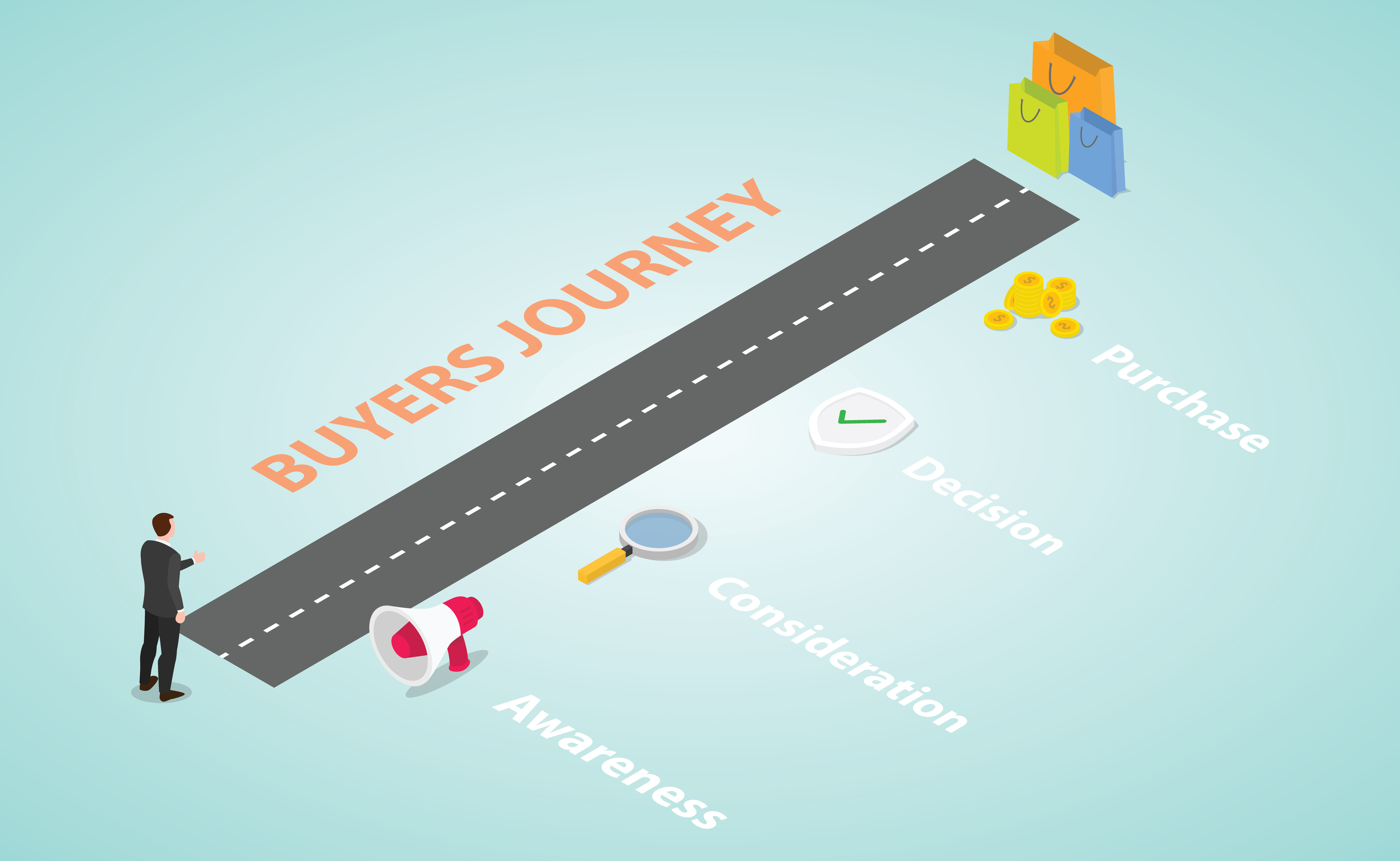
The buyer's journey should be an integral part of any marketing strategy, but when you throw AI SEO into the mix, it becomes a completely different beast. Read on to find out how AI SEO can help you understand the buyers journey better.
<h2>Understanding the Modern Buyer's Journey in 2026</h2><p>The buyer's journey isn't what it used to be. If you're still thinking in terms of linear funnels and predictable paths to purchase, you're missing the reality of how buyers actually behave today. The traditional model of awareness, consideration, and decision still provides a useful framework, but the way buyers move through these stages has fundamentally changed.</p><p>Today's buyers are digital natives who expect instant answers and personalized experiences.<a target="_blank" rel="noopener noreferrer nofollow" class="text-primary underline" href="https://www.gartner.com/en/newsroom/press-releases/2025-06-25-gartner-sales-survey-finds-61-percent-of-b2b-buyers-prefer-a-rep-free-buying-experience#:~:text=Bad%20prospecting%20actively%20damages%20relationships,in%20the%20Gartner%20Sales%20Practice."> According to recent Gartner research</a>, 61% of B2B buyers now prefer a rep-free buying experience, choosing to conduct their own research before ever speaking to a salesperson. This shift isn't just a preference; it's reshaping how businesses need to approach their SEO and content strategies.</p><p>The rise of AI tools like ChatGPT, Claude, and Perplexity has accelerated this transformation. Buyers no longer start with Google searches alone. They're asking AI assistants complex questions, getting instant summaries of product comparisons, and forming opinions before they even visit your website. This new reality demands a fresh approach to understanding and optimizing for the buyer's journey.</p><h2>The Three Stages of the Buyer's Journey: Awareness, Consideration, and Decision</h2><img src="https://access.discoveraio.com/storage/v1/object/public/public-assets/email-images/Your_paragraph_text__4_.png" alt="" class="editor-image max-w-full h-auto rounded-lg cursor-pointer transition-all hover:opacity-80" draggable="false" style="max-width: 100%; height: auto;"><p>While the core stages remain consistent, what happens within each stage has evolved dramatically. Let's break down what modern buyers actually do at each point.</p><h3>Awareness Stage: The Discovery Revolution</h3><img src="https://access.discoveraio.com/storage/v1/object/public/public-assets/email-images/Treasure_Map.jpeg" alt="" width="75%" class="editor-image max-w-full h-auto rounded-lg cursor-pointer transition-all hover:opacity-80" draggable="false" style="max-width: 100%; height: auto;"><p>In the awareness stage, buyers recognize they have a problem but aren't sure how to solve it. Traditional SEO wisdom says to target informational queries here, and that's still true. But the game has changed. Informational queries are increasingly answered instantly through AI overviews and zero-click searches, meaning your content might inform buyers without them ever visiting your site.</p><p>Modern awareness-stage behavior includes:</p><ul><li><p>Asking AI chatbots open-ended questions about their challenges</p></li><li><p>Browsing LinkedIn discussions and Reddit threads for peer insights</p></li><li><p>Watching YouTube explainers to understand concepts quickly</p></li><li><p>Reading AI-generated summaries of multiple sources simultaneously</p></li></ul><p>When you're thinking of buyers in this stage of the journey, your awareness content needs to be discoverable not just in traditional search, but across AI platforms and social channels where these initial conversations happen.</p><h3>Consideration Stage: The Evaluation Ecosystem</h3><img src="https://access.discoveraio.com/storage/v1/object/public/public-assets/email-images/thinking_emoji.png" alt="" width="75%" class="editor-image max-w-full h-auto rounded-lg cursor-pointer transition-all hover:opacity-80" draggable="false" style="max-width: 100%; height: auto;"><p>During consideration, buyers know their problem and are evaluating solutions. With that in mind, they aren't just looking at Google for their answers anymore, they're having full conversations with their LLM of choice. </p><p>Today's consideration-stage patterns show buyers:</p><ul><li><p>Using AI to generate vendor comparison matrices instantly</p></li><li><p>Seeking specific use cases and implementation examples</p></li><li><p>Validating AI recommendations through peer communities</p></li><li><p>Creating shared documents with their buying committee for collaborative evaluation</p></li></ul><p>The consideration stage is where SEO becomes particularly crucial. When you're analyzing your content to see where it stacks up, place yourself in the position of your prospective buyer. </p><h3>Decision Stage: The Trust Verification</h3><img src="https://access.discoveraio.com/storage/v1/object/public/public-assets/email-images/Gavel.jpeg" alt="" width="75%" class="editor-image max-w-full h-auto rounded-lg cursor-pointer transition-all hover:opacity-80" draggable="false" style="max-width: 100%; height: auto;"><p>At the decision stage, buyers have narrowed their options and need final validation. They want to feel confident in their decision and will be focusing their queries in more intricate manners. </p><p>Decision-stage behaviors now include:</p><ul><li><p>Asking AI for specific implementation concerns and gotchas</p></li><li><p>Searching for recent customer reviews and case studies</p></li><li><p>Verifying claims through third-party sources</p></li><li><p>Seeking pricing transparency and ROI calculators</p></li></ul><h2>How AI is Disrupting Traditional Buyer Journey Models</h2><img src="https://access.discoveraio.com/storage/v1/object/public/public-assets/email-images/meme_1.jpg" alt="" class="editor-image max-w-full h-auto rounded-lg cursor-pointer transition-all hover:opacity-80" draggable="false" style="max-width: 100%; height: auto;"><p>The impact of AI on the buyer's journey goes beyond just adding new tools to the mix. It's fundamentally changing how information is discovered, evaluated, and trusted. Generative AI tools like ChatGPT, Perplexity, and Claude are transforming how buyers discover and evaluate solutions, often without clicking through to websites at all.</p><p>This shift toward zero-click SEO means that your content strategy needs to account for scenarios where your information appears in AI responses but doesn't generate direct traffic. The goal shifts from driving clicks to ensuring your brand and solutions are accurately represented in AI-generated answers.</p><p>Consider how buyers now research:</p><ul><li><p>They ask conversational questions instead of typing keywords</p></li><li><p>They expect comprehensive answers that synthesize multiple sources</p></li><li><p>They trust AI to surface relevant options they might not have discovered otherwise</p></li><li><p>They use AI to translate technical information into language their stakeholders understand</p></li></ul><p>The demographic shift amplifies this change.<a target="_blank" rel="noopener noreferrer nofollow" class="text-primary underline" href="https://www.forrester.com/blogs/younger-b2b-buyers/"> Millennials and Gen Z now account for 71% of B2B buyers, up from 64% in 2022. </a>These digital natives are comfortable using AI as their primary research tool, making AI optimization essential for reaching the majority of your potential buyers.</p><p><strong>Mapping Keywords to Buyer Journey Stages for Maximum Impact</strong></p><p>Effective keyword mapping requires understanding both traditional search intent and AI query patterns. The key is identifying clusters of related terms that indicate where someone is in their journey.</p><p><strong>Awareness Stage Keywords</strong></p><p>Focus on problem-oriented and educational queries:</p><ul><li><p>"Why is [problem] happening"</p></li><li><p>"How to improve [metric/outcome]"</p></li><li><p>"What causes [challenge]"</p></li><li><p>"Best practices for [topic]"</p></li></ul><p>But also consider conversational AI queries:</p><ul><li><p>"Explain [concept] like I'm starting from scratch"</p></li><li><p>"What should I know about [topic] before talking to my team"</p></li><li><p>"Help me understand if [problem] is something I should worry about"</p></li></ul><p><strong>Consideration Stage Keywords</strong></p><p>Target comparison and evaluation terms:</p><ul><li><p>"[Solution A] vs [Solution B]"</p></li><li><p>"Best [solution type] for [specific use case]"</p></li><li><p>"How to choose [solution category]"</p></li><li><p>"[Solution] alternatives"</p></li></ul><p>Include AI-friendly comparison queries:</p><ul><li><p>"Compare the top 5 [solution type] for [industry/size]"</p></li><li><p>"What questions should I ask [solution] vendors"</p></li><li><p>"Create an evaluation matrix for [solution category]"</p></li></ul><p><strong>Decision Stage Keywords</strong></p><p>Capture high-intent, specific searches:</p><ul><li><p>"[Brand] reviews [current year]"</p></li><li><p>"[Brand] pricing"</p></li><li><p>"[Brand] implementation time"</p></li><li><p>"[Brand] customer success stories"</p></li></ul><p>Account for AI verification queries:</p><ul><li><p>"Is [brand] good for [specific situation]"</p></li><li><p>"What are the hidden costs of [solution]"</p></li><li><p>"Common problems with [brand] implementation"</p></li></ul><p><strong>Creating Content That Wins in the AI-Powered Buyer's Journey</strong></p><p>Creating content for today's buyer journey means optimizing for both traditional search engines and AI discovery. Your content needs to be comprehensive enough to be cited by AI, specific enough to rank for targeted queries, and trustworthy enough to influence buying decisions.</p><p>For awareness stage content, focus on educational depth. AI models favor comprehensive resources that thoroughly explain concepts. Create definitive guides that answer not just the main question but anticipate follow-up questions. Structure your content with clear headers and summaries that AI can easily parse and reference.</p><p>Consideration stage content should emphasize practical comparison and evaluation frameworks. Instead of just listing features, provide evaluation criteria, implementation considerations, and specific use cases. Include structured data and comparison tables that AI can easily extract and present to users.</p><p>Decision stage content needs to build trust through specificity and recency. Fresh case studies, detailed implementation guides, and transparent pricing information help buyers validate their choice. Remember that AI often surfaces recent content when buyers ask about current experiences with your solution.</p><p><a target="_blank" rel="noopener noreferrer nofollow" class="text-primary underline" href="https://www.gartner.com/en/newsroom/press-releases/2025-06-25-gartner-sales-survey-finds-61-percent-of-b2b-buyers-prefer-a-rep-free-buying-experience#:~:text=Bad%20prospecting%20actively%20damages%20relationships,in%20the%20Gartner%20Sales%20Practice.">Robert Blaisdell from Gartner's Sales Practice</a> notes that "bad prospecting actively damages relationships with potential customers." The same applies to content. Generic, salesy content that doesn't genuinely help buyers make decisions will hurt your brand's presence in both traditional and AI-powered search.</p><p><strong>Measuring and Optimizing Your Buyer Journey SEO Strategy</strong></p><p>Traditional SEO metrics like rankings and traffic only tell part of the story. You need to track how your content performs across the entire buyer journey, including its influence on AI responses and zero-click searches.</p><p>Key metrics to monitor include:</p><ul><li><p><strong>Journey progression rate:</strong> How many users move from awareness to consideration content</p></li><li><p><strong>Multi-touch attribution:</strong> Which content pieces contribute to eventual conversions</p></li><li><p><strong>AI visibility score:</strong> How often your content appears in AI-generated responses</p></li><li><p><strong>Engagement depth:</strong> Time on page and scroll depth for different journey stages</p></li><li><p><strong>Content influence:</strong> Assisted conversions and touchpoint analysis</p></li></ul><p>Use tools that can track branded searches following informational queries, indicating users who discovered you through AI or zero-click results. Monitor discussion forums and social platforms where your content gets shared, as these peer recommendations strongly influence B2B buying decisions.</p><p>Regular optimization should focus on content gaps where AI tools might be providing outdated or incomplete information about your solution. Update your content frequently to maintain relevance, especially for decision-stage materials where buyers seek the most current information.</p><p><strong>Future-Proofing Your Approach: What's Next for the Buyer's Journey</strong></p><p>The buyer's journey will continue evolving as AI capabilities expand and buyer expectations shift. </p><p>Emerging trends to prepare for include:</p><ul><li><p><strong>Hyper-personalized AI interactions:</strong> AI will increasingly tailor responses based on industry, company size, and specific use cases</p></li><li><p><strong>Voice and conversational search dominance:</strong> More complex, multi-turn conversations with AI assistants</p></li><li><p><strong>Real-time competitive intelligence:</strong> AI tools providing instant competitive comparisons and market insights</p></li><li><p><strong>Predictive buyer journey mapping:</strong> AI predicting next steps and proactively surfacing relevant content</p></li></ul><p>To stay ahead, focus on building content ecosystems rather than standalone pages. Create interconnected resources that comprehensively cover topics from multiple angles, making your brand the authoritative source AI models consistently reference.</p><p>Invest in understanding your actual buyers' journey through first-party data and customer interviews. The insights you gain will help you create content that resonates with real buyer needs rather than assumed patterns.</p><p><strong>Taking Action on Your Buyer Journey SEO Strategy</strong></p><p>The buyer's journey has transformed from a predictable path to a dynamic, AI-influenced ecosystem. Success requires adapting your SEO strategy to meet buyers where they are, whether that's in traditional search results, AI chat interfaces, or peer discussion forums.</p><p>Start by auditing your current content against the modern buyer journey. Identify gaps where you're missing opportunities to influence AI responses or support collaborative buying processes. Focus on creating comprehensive, trustworthy content that serves buyers at every stage while optimizing for both traditional and AI discovery.</p><p>Remember that in this new landscape, SEO becomes an integrated function, not a standalone effort. Your buyer journey optimization should align with broader revenue goals, not just traffic metrics. By understanding how modern buyers research and make decisions, you can create an SEO strategy that drives real business results.</p><p>Ready to transform your approach to the buyer's journey for AI SEO? <a target="_blank" rel="noopener noreferrer nofollow" class="text-primary underline" href="https://discoveraio.com/signup">Join the DiscoverAIO community</a> to access cutting-edge tools, strategies, and insights from marketers who are successfully navigating this AI-powered landscape. Together, we're not just adapting to the future of search; we're helping to shape it.</p>